
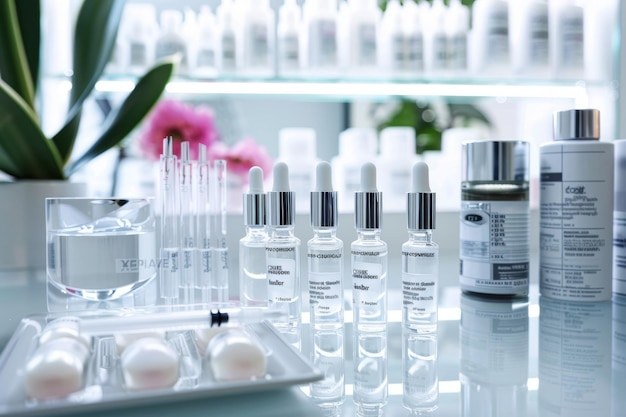
30 leading medical aesthetics companies are currently shaping the market, which means the sheer volume of products hitting the shelves is staggering. You aren’t just looking at simple creams anymore; you are looking at a massive intersection of biology and high-end engineering. It is easy to feel overwhelmed when every social media ad promises a different version of “perfection.”
We have seen the industry shift from basic topical treatments to complex, clinical-grade interventions. This isn’t just about vanity. It is about understanding the chemistry and the technology behind what goes into your skin. If you are planning to step into a clinic, you need to know what separates a professional-grade device from a consumer gadget.
The distinction between “beauty” and “medicine” has blurred. You might walk into a spa expecting a facial but end up discussing energy-based technologies. Knowing the difference can save you a lot of money and, more importantly, a lot of potential skin damage. Let’s get into the actual mechanics of how this works.
The Baseline: What You Must Verify Before Booking
Before any needle touches your skin or any laser hits your face, you need to check the regulatory status of the tools being used. Not all devices are created equal. Some are designed for home use, while others are strictly for professional clinical settings. This distinction is the difference between a subtle glow and a permanent scar.
It is vital to check if aesthetic (cosmetic) devices may be regulated by the FDA. This isn’t just a technicality. If a practitioner is using a device that isn’t cleared for its intended purpose, your risk profile changes immediately. You should ask for the specific model of the laser or the brand of the injector used during your consultation.
Don’t settle for vague answers. A legitimate clinic will have no problem showing you their equipment list. They should be able to tell you exactly what it does, the wavelength of the laser, or the concentration of the active ingredients in their skincare line. If they hesitate, walk away. Your skin is a biological organ, not a piece of fabric to be manipulated.
We suggest looking for practitioners who invest in reputable supply chains. For instance, many top-tier clinics rely on aesthetic medical supplies to ensure they are using products from both established and innovative brands. This variety allows them to customize treatments rather than using a one-size-fits-all approach. A professional clinic should feel more like a surgical center than a relaxation lounge.
Price is always a factor, but it shouldn’t be your only metric. A “deal” on dermal fillers often means the practitioner is using a generic, unbranded product that might not have the same lifting capacity or longevity as a name brand. You want predictability in your results. If you want consistent outcomes, you need consistent, high-quality ingredients.
| Category | Consumer Grade | Medical Grade |
|---|---|---|
| Skincare | Hydrating/Moisturizing | Active Retinoids/Acid Peels |
| Devices | Microcurrent/LED | Fractional Lasers/RF |
| Injectables | None | Dermal Fillers/Neurotoxins |
Step 1: Audit the Professional Inventory
The first thing we do when evaluating a clinic is look at their “toolkit.” You should be able to see a clear distinction between their skincare line and their clinical machines. High-quality clinics often carry specific lines that are designed to work in tandem with their procedures. For example, a clinic in a place like Tacoma, WA might offer a premier selection of high-quality products specifically chosen to support post-procedure healing.
Look for brands that are widely recognized in the medical community. While some boutique brands are great, you want to see the heavy hitters that have undergone rigorous clinical trials. When a clinic uses a top-tier skincare line, they are essentially ensuring that the “prep” and “aftercare” phases of your treatment are just as scientifically backed as the procedure itself.
Check their stock. A clinic that only has one brand of everything is a red flag. They might be incentivized to use a specific product because of a kickback, rather than because it is the best for your specific skin type. A good practitioner should be able to pivot. If you have sensitive skin, they should be able to swap a high-strength acid for something more soothing without breaking their budget.
Professionalism extends to the storage and handling of these products. Injectables, especially, have strict temperature requirements. If you see bottles sitting out on a counter in the sunlight, that is your cue to leave. Even the most expensive bavariapharma-distribution.ro/ products lose their efficacy if they aren’t stored in a controlled, medical-grade environment.
It’s about the details. A professional inventory is organized, temperature-controlled, and brand-diverse. This allows the clinician to tailor the experience to your unique anatomy and skin concerns.
Step 2: Understand the Device Mechanics
If you are looking into something beyond topical creams, you are likely looking at energy-based technology. This includes lasers, radiofrequency (RF), and ultrasound. Each one does something entirely different to your tissue. Understanding this prevents you from buying a laser hair removal session when what you actually need is skin tightening.
Lasers target specific pigments or blood vessels. If you have sun damage, you want a laser that is “attracted” to melanin. RF, on the other hand, uses heat to stimulate collagen deep within the dermis. It’s not about surface texture; it’s about structural integrity. It is a very different physiological response.
Then there are the injectables. Many people think “fillers” are the same as “Botox,” but they are fundamentally different tools. One adds volume where it has been lost, while the other relaxes the muscle that causes the wrinkle in the first place. A skilled practitioner will combine these techniques to create a natural look. This is what we call “layering.”
We recommend asking: “How does this device interact with my skin type?” A laser that works wonders on fair skin can be dangerous on darker skin tones due to the risk of hyperpigmentation. Always ask about the specific wavelength of the machine. If the technician can’t answer, they shouldn’t be using it on you.
I remember a client who spent $2,000 on a “skin rejuvenation” package only to find out it was just a basic light therapy session. The technician used big words, but the technology was consumer-grade. Always demand specifics on the equipment being used.
Step 3: Evaluate the Provider’s Portfolio
A provider’s experience is your best insurance policy. You should be looking for someone who specializes in your specific goal. A person who is an expert in body contouring might not be the best person for delicate orbital (eye) area filler. The anatomy of the face is incredibly complex, with many moving parts that react differently to pressure and volume.
Look at their before-and-after photos, but look at them critically. You are looking for “natural” results. If every single patient looks like they have the same “frozen” face, that provider has a specific aesthetic style that might not suit you. You want someone who understands facial harmony, not someone who just fills every wrinkle they see.
Large-scale companies like Allergan Aesthetics often lead the way in developing products like facial injectables and body contouring solutions. Because these companies are so large, the products they produce are often the gold standard for training. If a clinic uses these major brand products, it’s a sign they are following standardized, high-level medical protocols.
Don’t be afraid to ask for a consultation first. A good provider will spend 15 minutes talking to you before they ever mention a price. They should be assessing your bone structure, your skin elasticity, and your lifestyle. If they try to sell you a “package” during the first five minutes, they are a salesperson, not a clinician.
The best providers are those who know when to say “no.” If you ask for something that won’t look good on you, a real professional will explain why and offer an alternative. They should prioritize your facial symmetry over a quick sale.
Common Pitfalls to Avoid
The most common mistake is chasing “trends” rather than treating “problems.” Just because “lip flips” are popular on TikTok doesn’t mean your lips need them. Sometimes, what you think is a wrinkle is actually just dehydration or a lack of collagen that could be addressed with better skincare or a different type of treatment.
Another massive error is neglecting the aftercare. Medical aesthetics are a marathon, not a sprint. You might have a great treatment, but if you go out in the sun the next day or use a harsh exfoliant, you’ve just wasted your money and potentially harmed your skin. The “work” doesn’t end when you leave the clinic; it’s just beginning.
Finally, don’t ignore the “medical” in medical aesthetics. Many people treat these clinics like they are getting a haircut. They aren’t. These are medical procedures. If you have a history of keloid scarring, autoimmune issues, or certain skin conditions, you must disclose this. Failing to do so can lead to serious complications that no amount of expensive serum can fix.
- Mistake: Using home devices to mimic professional lasers.
- Mistake: Choosing the cheapest clinic instead of the most qualified one.
- Mistake: Over-filling to achieve a “smooth” look, resulting in a “puffy” appearance.
- Mistake: Skipping the consultation to save time/money.
You might think that a cheaper price tag means you are getting the same service, but in this industry, you are almost always paying for the level of expertise and the quality of the supplies used.
Is it worth the investment? If you choose a reputable provider who uses FDA-cleared equipment and high-quality, brand-name injectables, the results are both predictable and lasting. The cost of fixing a mistake made by an amateur is always higher than the price of doing it right the first time.
A few things readers ask
What are examples of medical aesthetics?
Common medical aesthetic procedures include neurotoxins like Botox, dermal fillers, chemical peels, laser skin resurfacing, and microneedling.
What are some good aesthetic skin care products?
Effective aesthetic skincare products typically include retinoids, hyaluronic acid serums, vitamin C antioxidants, and broad-spectrum SPF.
What are the top medical aesthetics companies?
Leading companies in the medical aesthetics industry include Allergan Aesthetics, Galderma, and Merz Aesthetics.
What are the best aesthetic skincare brands?
Highly regarded professional-grade brands include SkinCeuticals, Obagi, Zo Skin Health, and La Roche-Posay.
How do medical aesthetic products differ from regular skincare?
Medical aesthetic products often contain higher concentrations of active ingredients and are frequently prescribed or recommended by dermatologists for specific clinical results.